
Triveni Ghat Ganga Aarti: Timings, How to Reach & Where to Stay
Check Triveni Ghat Ganga Aarti timings, seasonal schedules, entry details, routes and where to stay nearby for a peaceful Rishikesh spiritual trip in India.
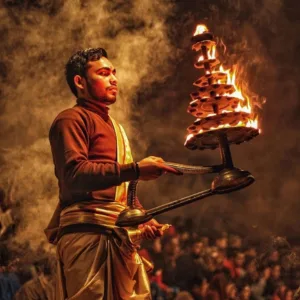
The evening sky grows softer over Rishikesh. People settle onto the steps beside the Ganga, devotional songs rise above the conversation, and priests prepare the lamps for a ritual that has drawn families and pilgrims to the river for generations. If you're visiting for the first time, it helps to know where to go and when to arrive rather than rushing through unfamiliar streets at sunset.
The question most visitors ask is about Triveni Ghat Ganga Aarti timings. There is a good reason: published schedules differ, and the start can change with the season. You might see a fixed 6:00 PM time on one website and a later summer time on another. Both can be useful planning references, but neither should replace a local check on the day you're visiting.
For many travellers, evening Ganga Aarti is the main reason to plan a visit. This guide explains the ceremony, the likely timing windows, free public entry, routes from stations and the airport, and how to choose a stay near the river. It also includes a gentle one-day itinerary for anyone who wants a spiritual Rishikesh trip without packing every hour with sightseeing.
Quick answer: The evening Ganga Aarti at Triveni Ghat takes place around sunset. India's Ministry of Tourism lists a 6:00–7:00 PM window and a ceremony lasting about 45 minutes, while independent local guides describe seasonal variations. Confirm the day's start time locally and aim to reach the ghat 45–60 minutes early. Source: Incredible India.
Triveni Ghat Ganga Aarti timings: what to plan for
Triveni Ghat is in central Rishikesh, beside the main town market. Its evening ritual is a regular part of local life, but it doesn't work like a concert with a fixed electronic ticket and a start time that never changes. The time is connected with evening prayer, sunset, local arrangements and the season.
The government's Incredible India guide to Triveni Ghat lists 6:00–7:00 PM. Travel guides updated in 2026 give different examples: some suggest approximately 5:00–5:30 PM in winter and 6:30–7:00 PM in summer, while another reports 6:00 PM in winter and 6:45 PM in summer. These are descriptions of commonly reported schedules, not a live confirmation for your date.
| Planning reference | What published sources report | How to use it |
|---|---|---|
| Ministry of Tourism | 6:00–7:00 PM | General official visitor information |
| Winter, roughly October–March | Early-evening starts; published examples range from about 5:00 to 6:00 PM | Ask for that day's exact time before leaving |
| Summer, roughly April–September | Published examples generally fall around 6:30–7:00 PM | Allow travel and seating time before sunset |
| Weekends and festival evenings | More visitors may gather | Arrive earlier and expect slower movement |
The safest plan is to confirm the day's Triveni Ghat Ganga Aarti timings with the local organizers or a trusted on-site contact. If you are staying nearby, ask the property team to check the schedule before you head out. Searches for Triveni Ghat winter timings are especially common when sunsets get earlier; the schedule still needs a same-day check. Avoid treating any seasonal table—including this one—as a guaranteed daily timetable.
What time should you arrive?
Arriving 45–60 minutes before the confirmed start gives you time to find the ghat, understand the viewing arrangements and settle in without pushing through the crowd. A longer buffer is sensible for families with children, senior travellers or anyone visiting during a major festival. It also leaves room for an unexpected traffic delay or a walk from the nearest vehicle drop-off point.
Triveni Ghat Ganga Aarti duration: how long should you allow?
Incredible India describes the ritual as lasting about 45 minutes. Other accounts distinguish the central lamp ceremony from the songs and gatherings around it. Set aside approximately 90 minutes to two hours for arrival, watching respectfully and leaving at a comfortable pace. You don't need to spend the full period at the ghat, but a little flexibility makes the experience less hurried.
Is there a morning Ganga Aarti?
Some local guides mention a shorter morning observance. Since the evening Aarti is the main public experience most travellers are looking for, this article focuses on that ceremony. If you specifically want to attend an early ritual, verify whether it is scheduled and where it takes place rather than assuming evening timings apply in the morning.
What is Triveni Ghat, and why is it sacred?
Triveni Ghat is a prominent riverfront bathing and prayer ghat in central Rishikesh. It has long been a gathering place for worship, quiet reflection and visits to the Ganga. Its location near the town's market also makes it part of everyday Rishikesh rather than a place visited only by tourists.
The word Triveni evokes the sacred meeting of three rivers: Ganga, Yamuna and Saraswati. In local religious tradition, the place is associated with this holy confluence. That association belongs to faith and tradition; it should not be read as a claim that visitors will see three distinct visible river channels joining at this exact spot.
People come here for different reasons. Some offer prayers for their loved ones. Others visit temples nearby, sit in silence or observe a ritual that is central to the area's spiritual identity. You don't have to know every mantra to visit with respect. Listening quietly and allowing worshippers space is a meaningful way to experience the ghat.
What happens during Ganga Aarti in Rishikesh?
Ganga Aarti is a devotional offering of light to the river, revered as Maa Ganga in Hindu tradition. Priests lift lamps during prayers and songs, while bells, chants and the movement of the flames create the ceremony's distinctive rhythm. Visitors gather on the riverfront steps and designated viewing areas to watch.
The atmosphere can feel both communal and personal. A group may be singing along while someone nearby closes their eyes in prayer. Families may stand together, and travellers who came simply to see a famous Rishikesh attraction often find the experience quieter and more reflective than expected.
Try not to see the event only through your camera. Take a few photographs from a considerate position, then put the phone down for part of the ritual. You'll notice the sounds, the movement of the lamps and the changing light over the water more clearly.
Rishikesh has other evening Aarti gatherings, including at Parmarth Niketan. They are different locations and separate ceremonies, so a schedule found for one should not be used for the other.
Is Triveni Ghat Ganga Aarti free? Triveni Ghat entry fee and donations
General public viewing at Triveni Ghat is generally described as free. You do not need to buy a standard entrance ticket merely to watch the evening ceremony from the public area. Offerings or purchases from vendors are separate and voluntary. Because local arrangements and legal directions can change, confirm current arrangements before your visit.
In a 13 January 2026 interim order, the Uttarakhand High Court permitted Shri Ganga Sabha to continue conducting the Aarti subject to conditions, including a prohibition on charging entry fees or tickets to people participating in the ritual. This was interim relief, not a permanent policy statement. Check current arrangements with local authorities or the ghat before visiting.
If someone offers a paid 'VIP ticket', priority entry, a front-row place or a private ceremony, ask who authorizes the arrangement and what the fee covers. A hotel's assistance with transport or visit planning is not the same as an official entitlement to exclusive public-ghat access. Don't pay anyone who cannot explain the arrangement clearly.
Small donations may be offered willingly, but no visitor should feel pressured to make a payment to experience public Ganga Aarti in Rishikesh. Treat this distinction as especially important if you're visiting with family and simply want to attend respectfully.
How to reach Triveni Ghat in Rishikesh
Triveni Ghat sits in the older central part of Rishikesh, close to the local market and Ghat Road. Vehicles may not reach the exact riverfront steps because surrounding lanes can be narrow and busy. Plan to walk at least the final section, and ask the driver where the appropriate drop-off or parking area is on your date.
Open Triveni Ghat in Google Maps
From Rishikesh railway station
The older Rishikesh railway station is relatively close to the ghat. Travel guides commonly put the distance at around 1.5 km, although the walking route will depend on the exit you use. For visitors travelling light, a walk may be possible. If you have luggage or want to avoid crowded roads, take a local auto-rickshaw and walk the last stretch as needed.
From Yog Nagari Rishikesh station
Yog Nagari Rishikesh and Rishikesh railway station are not the same station. Check the station name on your train ticket before arranging pickup. From Yog Nagari, a taxi or auto-rickshaw can take you toward the central town. Leave extra time for the final approach and do not assume that the last-minute drop-off will be directly at the steps.
From Jolly Grant Airport, Dehradun
Jolly Grant Airport serves Rishikesh and is a common arrival point for travellers flying into Uttarakhand. A prearranged taxi is often convenient for families or visitors with suitcases. Airport-to-town travel time varies with traffic, roadwork and the precise destination. If your flight lands in the late afternoon, ask your driver or accommodation whether arriving in time for that evening's Aarti is realistic.
From Haridwar
Getting to Triveni Ghat from Haridwar is straightforward in principle, though the timing depends on transport and traffic. Haridwar and Rishikesh are connected by road and rail. Depending on your schedule, you can travel toward central Rishikesh by taxi, bus or another available service, then continue to the ghat. If you plan to watch Aarti at Har Ki Pauri in Haridwar as well, remember that it is a separate ceremony with its own timing and travel requirements.
From Tapovan, Ram Jhula and Swarg Ashram
These popular Rishikesh areas are not interchangeable with central Rishikesh. Road distances and available river crossings can make the journey to Triveni Ghat longer than it looks on a simple map. Confirm your route, current bridge access and return transport before setting out, particularly when travelling after dark.
Triveni Ghat parking, accessibility and visiting with family
The busiest period is usually shortly before and after the evening ceremony. If you're travelling by car, don't assume there will be parking immediately beside the ghat. Ask about the nearest permitted parking or drop-off location and be prepared for a short walk through the market area.
Ganga Aarti at Triveni Ghat for families calls for a bit of extra preparation. Families with small children should choose a meeting point in case anyone becomes separated. Keep a hand on younger children near the river and avoid crowded steps where they cannot stand securely. In the monsoon, rising water and wet stone surfaces make extra caution essential.
For senior citizens or travellers with limited mobility, the critical question is not simply the distance from a hotel to Triveni Ghat. It is the actual step-free route, whether a vehicle can drop you close to the viewing area and whether accessible space will be available during the ceremony. Facilities and crowd arrangements can change, so check locally before the visit. If the walking or steps seem difficult, don't force the outing; a comfortable, respectful visit matters more than reaching the front row.
A practical checklist before leaving your stay includes a charged phone, comfortable shoes for the walk, a water bottle, a warm layer in winter and minimal valuables. Keep your hands free where possible. Travel light rather than carrying a large bag through the crowd.
Best time of year to experience Triveni Ghat
You can visit Rishikesh throughout the year, but your experience at the riverfront will change with the weather. The best season depends on whether you prefer cooler evenings, longer summer days or the lush monsoon landscape.
October to March: Cooler weather can make daytime sightseeing pleasant, though winter evenings beside the river feel chilly. A shawl or jacket is useful while waiting for the ceremony. Because darkness comes earlier, the difference between published winter and summer timings matters most during these months.
April to June: Longer daylight hours give you more time for local sightseeing before evening prayer. Heat can be tiring during the afternoon, so rest, drink water and avoid arriving exhausted. Check the day's schedule even if a summer guide gives a familiar start time.
July to September: The monsoon brings greenery and changing river conditions. Rain, slippery surfaces and stronger currents can affect how safe or comfortable a riverfront visit feels. Follow any local barriers or official safety instructions, and do not enter the water when conditions are unsafe.
Festivals and holidays can increase footfall in and around central Rishikesh. If you're travelling for a particular observance, organize transport and accommodation early, but still confirm the ceremony arrangements close to your visit.
Triveni Ghat vs Parmarth Niketan: which Aarti should you visit?
Both sites are associated with the sacred Ganga, but they offer different surroundings. Triveni Ghat is an accessible town ghat where local residents and visiting pilgrims gather. Parmarth Niketan is associated with an ashram in the Swarg Ashram area. The two are not the same venue, and it is easy to lose time by following directions to the wrong place.
| Consideration | Triveni Ghat | Parmarth Niketan |
|---|---|---|
| Location | Central Rishikesh, town-market side | Swarg Ashram area |
| Atmosphere | Public town gathering | Ashram-associated setting |
| Good for | Visitors exploring central Rishikesh | Visitors staying near Swarg Ashram and the ashram area |
| Timing | Confirm with local ghat organizers | Confirm separately with the ashram |
If you have two evenings, visiting both can help you understand different sides of Rishikesh's spiritual life. If you have only one evening, choose the location that fits your route, mobility needs and accommodation. There is no need to rush between them on the same night.
Where to stay near Triveni Ghat
If you want to stay near Triveni Ghat, accommodation choice is more than a price comparison. If Ganga Aarti is one of the main reasons for your journey, think about convenience as well as cost. Think about how you will reach the river, how late you want to stay out and what sort of morning you want afterward. The ideal stay for a group planning rafting and café visits may not be ideal for an older couple visiting primarily for prayer.
Hotels in central Rishikesh
A centrally located hotel can be practical if you want quick access to markets, transport and the ghat. Before booking, ask for the actual walking route to Triveni Ghat, not just a map's straight-line distance. A 'nearby' hotel may still involve busy crossings, stairs or a long walk at the end of the evening.
Riverside accommodation with Ganga views
A riverside room can make the Ganga part of your trip beyond the Aarti itself. Morning light, the movement of the water and time to sit quietly can be especially appealing on a spiritual holiday. But check whether your selected room category really faces the river. 'Near Ganga' and 'direct Ganga view' are not identical descriptions.
Private villas for couples and families
For a small group that values privacy, a villa can provide comfortable shared space between outings. Separate bedrooms, a place to gather and a slower schedule can be useful after a busy public ceremony. Compare access, room layout, meal arrangements, safety, guest capacity and transport assistance instead of deciding from photographs alone.
Choosing a stay for an elderly family member
If your trip includes parents or grandparents, ask specific questions: Are there stairs within the property? Can a vehicle reach the entrance? How far is the realistic route to the ghat? Can staff help arrange a suitable transfer? These answers may matter more than whether a property appears close on an online map.
A peaceful spiritual stay at The Neeraj Ganga Divine Stay
The Neeraj Ganga Divine Stay is a private riverside accommodation option on Main Haridwar Road in Rishikesh. The property website advertises walking-distance access to Triveni Ghat, a private 2BHK villa, Ganga views, a private pool, a Jacuzzi and opportunities for yoga and wellness activities.
For travellers who want to attend the evening ceremony and then return to a quieter space, this combination can be appealing. The villa is positioned for guests who prefer privacy and a personal schedule rather than spending every part of the holiday in public common areas.
Explore the 2BHK luxury villa for room details and amenities, or view the property's wellness experiences if you'd like to add time for meditation, yoga or traditional wellness activities to your stay.
The website describes Triveni Ghat as roughly a five-minute walk away. Before booking, ask the team for the actual route from your booked accommodation to the public viewing area, especially if someone in your party needs step-free access. The same practical check applies to your chosen room category, transfers and any experience described as complimentary.
The property also advertises assistance connected with Triveni Ghat Ganga Aarti. Ask the team what current arrangements can be supported and whether anything involves an authorized local organizer. Public viewing itself is free, and no special seating or priority entry should be assumed without independent confirmation.
For general enquiries, the property's website lists +91 82730 70072. You can also use the contact page to clarify the route, available accommodation and the day's visit plan.
A simple one-day spiritual itinerary in Rishikesh
You don't need a packed schedule to feel that you've experienced Rishikesh. If Ganga Aarti is your main event, build the rest of the day around it rather than squeezing the ceremony between distant attractions.
Morning: Begin with a peaceful breakfast and, if you wish, a short yoga or meditation session. Spend time by the river only in designated safe areas. A slow morning leaves energy for the evening.
Late morning: Explore central Rishikesh and consider visiting Bharat Mandir or Raghunath Temple, subject to opening hours. Take your time and dress respectfully. If you prefer to avoid busy streets, make this a shorter excursion.
Afternoon: Return to your accommodation for lunch and rest. This is especially useful during warm months or when travelling with children and senior relatives. Check the Triveni Ghat Ganga Aarti timings for your date with a local contact at this point, rather than discovering a schedule change when you're already on the road.
Early evening: Leave with a generous time buffer, reach the ghat before the ceremony and choose a safe viewing position. Let the chants and the lamps become the focus of the evening instead of worrying about the next stop.
After Aarti: Return to your accommodation and have dinner. If you're staying beside the Ganga, enjoy a quiet end to the day. A simple itinerary often creates more space for reflection than a long list of places checked off in a hurry.
Responsible and respectful visitor tips
Triveni Ghat is an active place of worship, not only a sightseeing location. The most considerate visitors make room for the people who come to pray every day. Keep pathways clear, respect instructions from organizers and avoid interrupting rituals for photographs.
Do not leave plastic packaging, flowers in synthetic wrapping, food containers or other rubbish on the steps or in the river. Where offerings are permitted, follow local guidance on responsible disposal. The Ganga is sacred to devotees and also a living river that needs care.
Swimming or entering fast-flowing water is not necessary for attending Aarti. Stay away from restricted areas and keep children within reach. If there is heavy rain or an official safety warning, adjust your plan.
Finally, don't turn an uncertain starting time into unnecessary stress. The key to a good visit is simple: confirm locally, arrive a little early and allow the experience to unfold at its own pace.
Frequently asked questions
1. What are the Triveni Ghat Ganga Aarti timings today?
The evening Aarti is held around sunset, but the exact starting time for today is not confirmed by a static travel guide. Incredible India lists 6:00–7:00 PM as a general window. Check with a current on-site contact before leaving and arrive 45–60 minutes early.
2. Is the evening Ganga Aarti at Triveni Ghat held every day?
The ceremony is ordinarily held every evening. Special events, weather, river safety conditions or administrative arrangements can affect how it is conducted. Confirm locally if attending on a particular date is essential to your trip.
3. Is Triveni Ghat Ganga Aarti free to attend?
General public viewing is generally described as free. A January 2026 Uttarakhand High Court interim order prohibited entry-fee or ticket charges by the organizer under the relief granted at that time. As the order was interim, check current arrangements locally. Any separately offered paid service should be checked for its purpose and authorization.
4. How early should I reach Triveni Ghat for Ganga Aarti in Rishikesh?
Aim to arrive 45–60 minutes before the locally confirmed time, with an extra buffer on festivals and busy weekends. That allows time for the market lanes, crowd movement and finding a suitable viewing position.
5. How can I reach Triveni Ghat from Yog Nagari Rishikesh railway station?
Take a local taxi or auto-rickshaw toward central Rishikesh, then walk the final stretch if vehicles cannot reach the riverfront. Check your train ticket carefully because Yog Nagari and the older Rishikesh railway station are different places.
6. Where should I stay near Triveni Ghat with my family?
Choose accommodation with a practical route to the ghat and a layout that suits your group. Options include central hotels, riverside stays and private villas. The Neeraj Ganga Divine Stay is a private 2BHK villa option whose website advertises walking-distance access, Ganga views and family-friendly space; confirm the exact route and availability before booking.
Key takeaways
- Triveni Ghat Ganga Aarti timings should be confirmed locally because published winter and summer schedules vary.
- The Ministry of Tourism lists 6:00–7:00 PM and describes an evening ceremony of approximately 45 minutes.
- General public entry to watch the ceremony is free; be cautious about claims involving paid priority access.
- Travellers should allow extra time for market lanes, parking, crowds and the final walk to the riverfront.
- Families and senior visitors should check the actual walking route, steps and available transport before leaving.
- Staying near central Rishikesh can make it easier to combine Aarti, temple visits and a relaxed riverside holiday.
Conclusion: make time for the experience, not just the schedule
A visit to Triveni Ghat is often remembered less for the number on the clock than for what happens once the lamps are lifted. The chants, the river and the people gathered in devotion offer a glimpse of Rishikesh that goes beyond a conventional sightseeing stop.
Good planning makes that experience more comfortable. Confirm the Triveni Ghat Ganga Aarti timings for your date, reach the riverfront with time to spare and choose accommodation that matches your needs. If you're travelling with family, give special attention to the walking route and the return journey. And if you have a few days in town, leave room for early mornings, gentle yoga and quiet moments beside the water.
To explore a private Ganga-view stay and discuss your Rishikesh itinerary, visit The Neeraj Ganga Divine Stay or call +91 82730 70072.
Sources and further reading
- Incredible India — Triveni Ghat: general 6:00–7:00 PM timing and approximate duration.
- Uttarakhand High Court interim order dated 13 January 2026: public entry-fee restriction under interim relief; verify any later orders before publishing legal claims as current policy.
- Anubhav Travel — Triveni Ghat guide, updated 23 October 2026: local seasonal timing and access examples.
- India OnGo — Triveni Ghat: alternative seasonal timings and firsthand visitor information.
- The Neeraj Ganga Divine Stay: property location, advertised Triveni Ghat proximity, amenities and contact details.